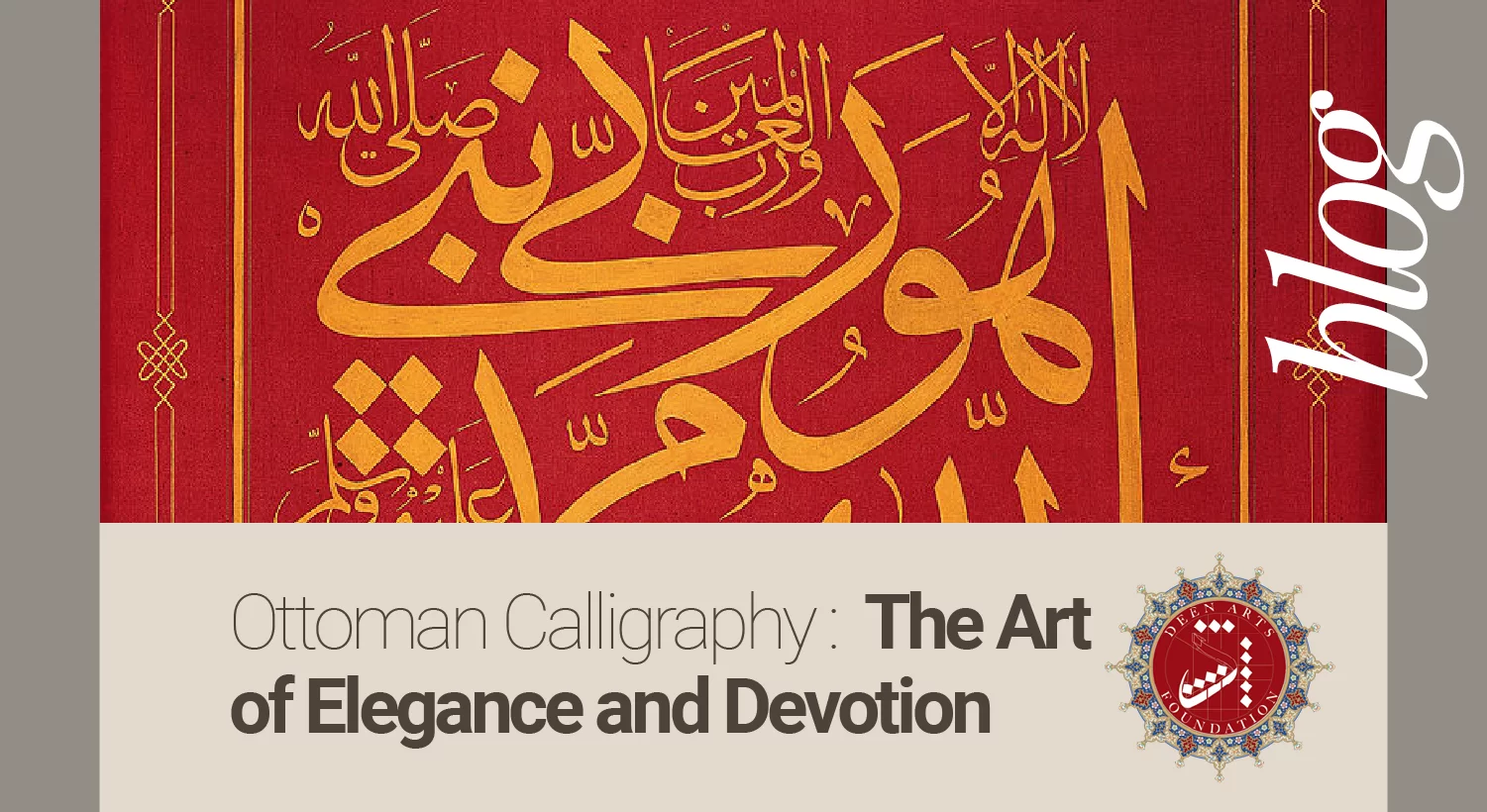
Ottoman Calligraphy: The Art of Elegance and Devotion
The Ottoman Empire is renowned not only for its monumental architecture and expansive influence but also for its dedication to the art of calligraphy. Ottoman calligraphy became a refined and revered art form, reaching heights of elegance and sophistication unmatched in its time. Rooted in the Islamic tradition, it developed into a uniquely Ottoman expression, shaped by the empire’s cultural fusion and respect for the written word. In this post, we’ll explore the origins, evolution, and legacy of Ottoman calligraphy, along with its influence on modern art and design.
The Origins and Cultural Significance of Ottoman Calligraphy
For centuries, Islamic calligraphy has been more than a simple transcription of text; it is an art form steeped in spirituality and devotion. In the Ottoman Empire, calligraphy was considered one of the highest forms of art, as it involved rendering the divine words of the Quran in beautiful and intricate designs. The Ottomans inherited the art of calligraphy from earlier Islamic empires, such as the Abbasids and Seljuks, and were deeply inspired by Persian calligraphy traditions.
The Ottomans elevated calligraphy to an unprecedented level of prominence. It became not only a personal and spiritual practice but also a matter of state, used in imperial decrees, architectural embellishments, and the decoration of sacred spaces.