The Arabic Calligraphy Appreciation course is four weeks long and introduces the student to an awareness of the world of calligraphy and the discipline required in learning to be a calligrapher.
Subject: Arabic Calligraphy Appreciation
Course Format: Online, 3 hour sessions
Course schedule: Sundays, 5 p.m. – 8 p.m. UTC
June 15 – July 6
Instructor: Farzana Razzaque Hoca
Course fees:
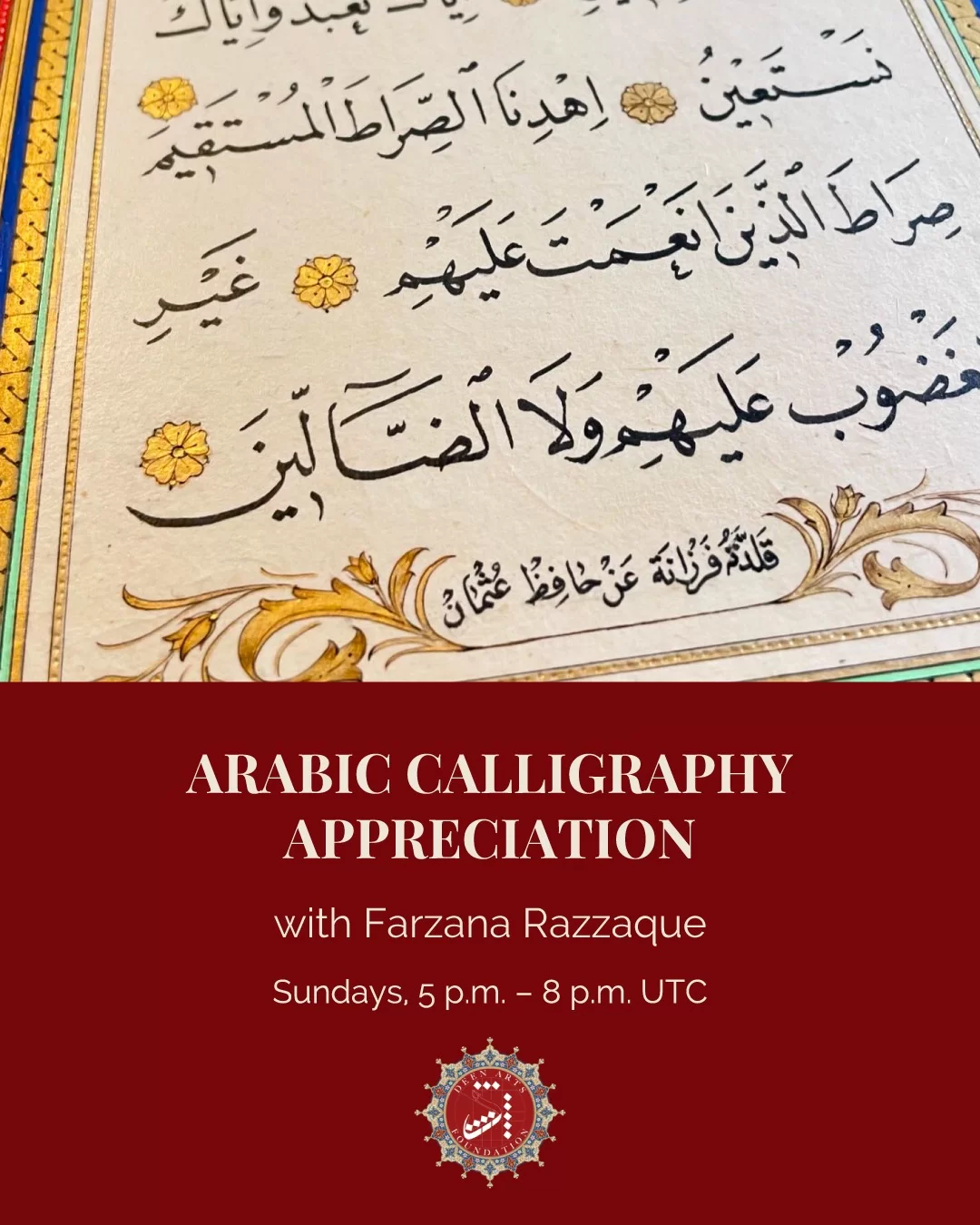
The Arabic Calligraphy Appreciation course is four weeks long. It introduces the student to an awareness of the world of calligraphy and the discipline required in learning to be a calligrapher.
While this course is not on the path to Ijaza (certification) in Arabic calligraphy, it is a way to take an intellectual and hands-on look at how Arabic calligraphy is taught formally. The most important aspect of this class is understanding the anatomy of letters in the Thuluth script by writing them and analyzing the works of some famous calligraphers. The Islamic arts are transmitted through the Ijaza system, and a rigorous methodology has preserved calligraphy for over 1000 years. This course creates an awareness and appreciation of this tradition. Our teacher, Farzana Razzaque, is a calligrapher and artist training in the Osmanli (Ottoman) tradition of the Naskh and Thuluth scripts. Students are expected to allocate approximately 4 hours per week to practice, prepare their lessons for submission, and attend live online classes.
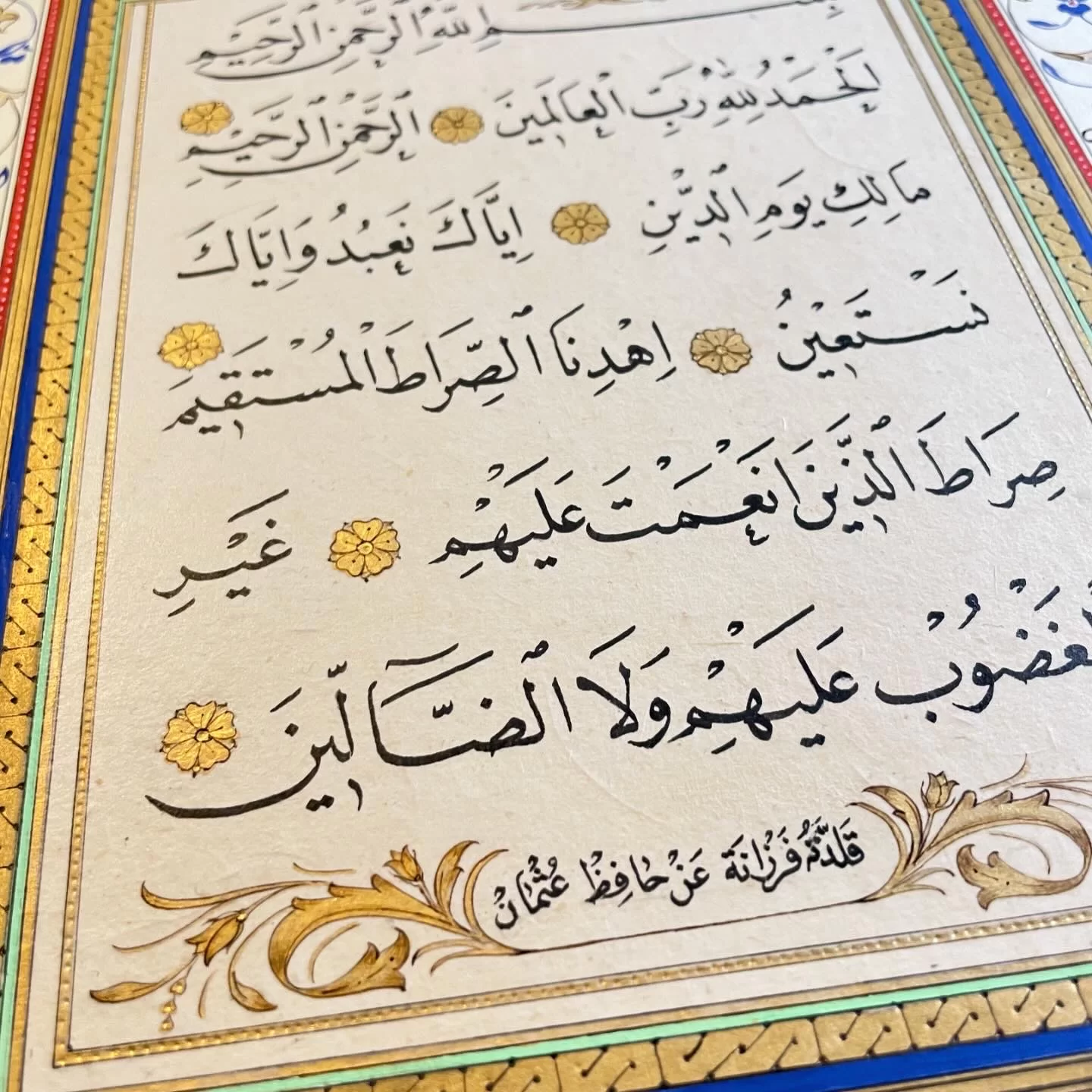
Farzana Razzaque will explore a brief history of Arabic calligraphy and proceed with interactive and hands-on classes that allow students to experience the world of calligraphy. Students will learn how to hold a bamboo pen (qalam), ink, and prepare an inkpot. An artistic approach will be taken for those who enjoy the creative aspects of calligraphy.
The Divinely inspired purpose of calligraphy is not only learning the mechanics of writing the letters, which are based on philosophical and spiritual understandings but is also a means of disciplining the nafs. It is considered an Islamic science (akin to fiqh and Tafseer) because it preserves the written Word of Allah, and it is a means of purification of the nafs. There are many texts on the subject written by present and past scholars. Understanding the intentions of the scholars who developed and preserved this Islamic science helps refine one’s intention before embarking on the calligraphic path. May Allah Grant Tawfiq to all of your endeavors.
Classes will be conducted online using Zoom, and Whatsapp will be used for communication, sharing, and homework.
Please note that the syllabus may change slightly based on the pace of the students.
ALTERNATIVE MATERIALS:
Farzana Razzaque
Farzana Razzaque is a graduate of the School of Architecture at the University of Texas at Austin. She has been dedicated to the study of Islamic calligraphy and tezhip (illumination) for over nine years. Farzana Hoca holds ijazahs (authorizations to teach) in the Thuluth and Naskh scripts within the Ottoman tradition, granted by her teachers, Master Calligraphers Haji Noor Deen Hoca and Ahmet Kutluhan Hoca. She has also received ijazahs in Riq‘a, Diwani, and Diwani Jali scripts from Master Calligrapher Shahrayanshah Sirajuddin
In addition to her calligraphy training, Farzana Hoca continues to study tezhip under the guidance of master tezhip artists Fatma Ulusoy Sirajuddin and Ayşe Gülcan Özbalak. She is currently pursuing a Ph.D. at the University of Texas at Dallas, where her research focuses on the evolution of calligraphy and the contemporary mus’haf in South Asia.
Due to limited seating, we request you cancel by May 5, 2025, to receive a full refund.
For inquiries, contact [email protected]

Get the latest updates via email. Don’t miss it. Any time you may unsubscribe.
Get empowered, fulfilled and inspired through our high-quality courses, events and an exclusive Islamic Art community
Copyright © 2025 House of Islamic Arts, All rights reserved.